
SEO-friendly content is content that is written, structured, and optimized in a way that helps it rank well in search engine results while also providing value to human readers. It’s not just about adding keywords—it’s about creating high-quality material that answers user intent, keeps visitors engaged, and gives search engines clear signals about what the content is about.

If your website is your storefront, SEO-friendly content is the sign that attracts people walking by, the layout that helps them find what they need, and the helpful information that keeps them coming back. In this guide, you will find all you need to know about SEO based content, and good SEO writing practices.
What Is SEO Friendly Content?

SEO based content is any form of content—blog posts, product descriptions, category pages, service pages, FAQs, or landing pages—that is built with both search visibility and user satisfaction in mind. It combines relevant keywords, logical structure, optimized HTML, and clear messaging to help search engines index the page properly and users find exactly what they’re looking for.

Unlike regular content that might be informative but invisible to search engines, SEO-friendly content is optimized at every level:

  • What it says
  • How it’s structured
  • How it performs technically
  • How it fits into the larger content ecosystem of the website

Why Is SEO Based Content Important?

Search engines use hundreds of signals to determine which pages to rank for any given query. Content remains one of the most powerful and controllable elements of SEO. When done right, SEO-based content can:

  • Attract organic traffic without relying on paid advertising
  • Answer user intent, leading to higher engagement and satisfaction
  • Improve time on site and reduce bounce rates
  • Earn backlinks naturally, increasing site authority
  • Help pages rank for a wider range of related keywords
  • Convert readers into leads or customers

In other words, it not only helps you get found—it helps you turn visitors into results.
Here are some of the important features of good SEO writing…

  1. Satisfies Search Intent

Every piece of content must align with why someone is searching for a particular keyword:

  • Are they trying to learn something? (Informational intent)
  • Are they comparing options? (Navigational or commercial intent)
  • Are they ready to buy? (Transactional intent)

Matching the intent improves relevance, keeps users engaged, and increases the chances of ranking well.

  1. Built Around Strategic Keywords

Keyword research should identify:

  • Primary keyword (main focus of the content)
  • Secondary or related keywords (variations, long-tail phrases)
  • Semantic keywords (conceptually related terms to reinforce context)

Keywords should be included in:

  • Page title (meta title)
  • H1 heading
  • First 100 words of the content
  • Subheadings (H2, H3)
  • URL (if possible)
  • Image alt attributes
  • Meta description

But keyword placement must be natural and user-friendly—never forced.

  1. Clear Structure and Formatting

Well-organized content makes it easier for users to scan and understand and helps search engines identify the hierarchy of information. Use:

  • One H1 heading that defines the page topic
  • Logical subheadings (H2, H3, etc.) to separate sections
  • Short paragraphs (2–4 sentences max)
  • Bullet points and numbered lists where applicable
  • Images and visual content with descriptive file names and alt text
  • Internal links to related pages on your site
  • External links to credible sources when referencing data or quotes

Proper formatting increases readability and crawlability, both critical to SEO.

  1. High Content Quality and Originality

Search engines reward content that is:

  • Unique (not duplicated across other websites or pages)
  • Helpful (solves the user’s problem or answers their question)
  • Comprehensive (covers the topic in depth without fluff)
  • Well-written (free of grammar and spelling errors)
  • Accurate and trustworthy (especially for YMYL topics like health, finance, or legal)

The better the quality, the more likely users will stay on the page, share it, or link to it—actions that search engines use as positive ranking signals.

  1. Optimized for User Experience (UX)

User signals like time on page, scroll depth, and bounce rate matter. SEO-friendly content supports positive engagement by:

  • Loading quickly (optimize image sizes, avoid bloated scripts)
  • Displaying well on mobile devices
  • Avoiding intrusive pop-ups or ads
  • Being easy to read, visually and structurally
  • Having a clear and compelling call to action (CTA) when appropriate

If users land on your page and quickly leave, it sends a negative signal—even if your content is optimized in other ways.

  • Blog posts – Informative articles designed to rank for informational or long-tail search queries.
  • Product descriptions – Optimized content that highlights benefits and includes purchase-intent keywords.
  • Category pages – SEO-focused category descriptions that support internal linking and keyword targeting.
  • Landing pages – Focused on a single topic or offer with a strong CTA and keyword targeting.
  • Service pages – Inform and convert, using keywords relevant to local or niche services.
  • Guides and tutorials – In-depth, long-form content that can rank for a wide range of related terms.

Each content type requires different keyword strategies, tones, and levels of detail.

  • Research first: Make your research to understand keyword demand and competition.
  • Create a content brief: Plan out your keyword targets, outline, headings, and intent before writing.
  • Write naturally and clearly: Avoid keyword stuffing. Focus on flow and clarity.
  • Include internal links: Help users and search engines discover other relevant pages.
  • Use schema markup: For articles, products, FAQs, or reviews, structured data can improve how your page appears in results.
  • Edit and proofread: Clear, error-free content performs better and builds more trust.
  • Update regularly: Refresh outdated stats, references, or examples to keep the content current.

There’s no universal length, but it should be long enough to fully answer the user’s intent. General benchmarks:

  • 300–600 words – For simple definitions, product pages, or low-competition keywords
  • 800–1,200 words – Ideal for most blog posts or local service pages
  • 1,500–3,000+ words – For detailed guides, pillar content, or competitive keywords

Longer content can rank for more related terms—but only if it stays focused and useful throughout.

  • Focusing only on keywords – Good content must provide real value, not just optimization.
  • Neglecting search intent – If your content doesn’t match what people are actually looking for, it won’t perform.
  • Using generic or duplicate content – Rewriting the same ideas without offering new insight won’t help you stand out.
  • Ignoring metadata – Titles, meta descriptions, and image alt text help boost click-through rates and accessibility.
  • Overlooking mobile optimization – The majority of users browse from mobile devices; content should be responsive and easy to read, which means mobile-friendly.
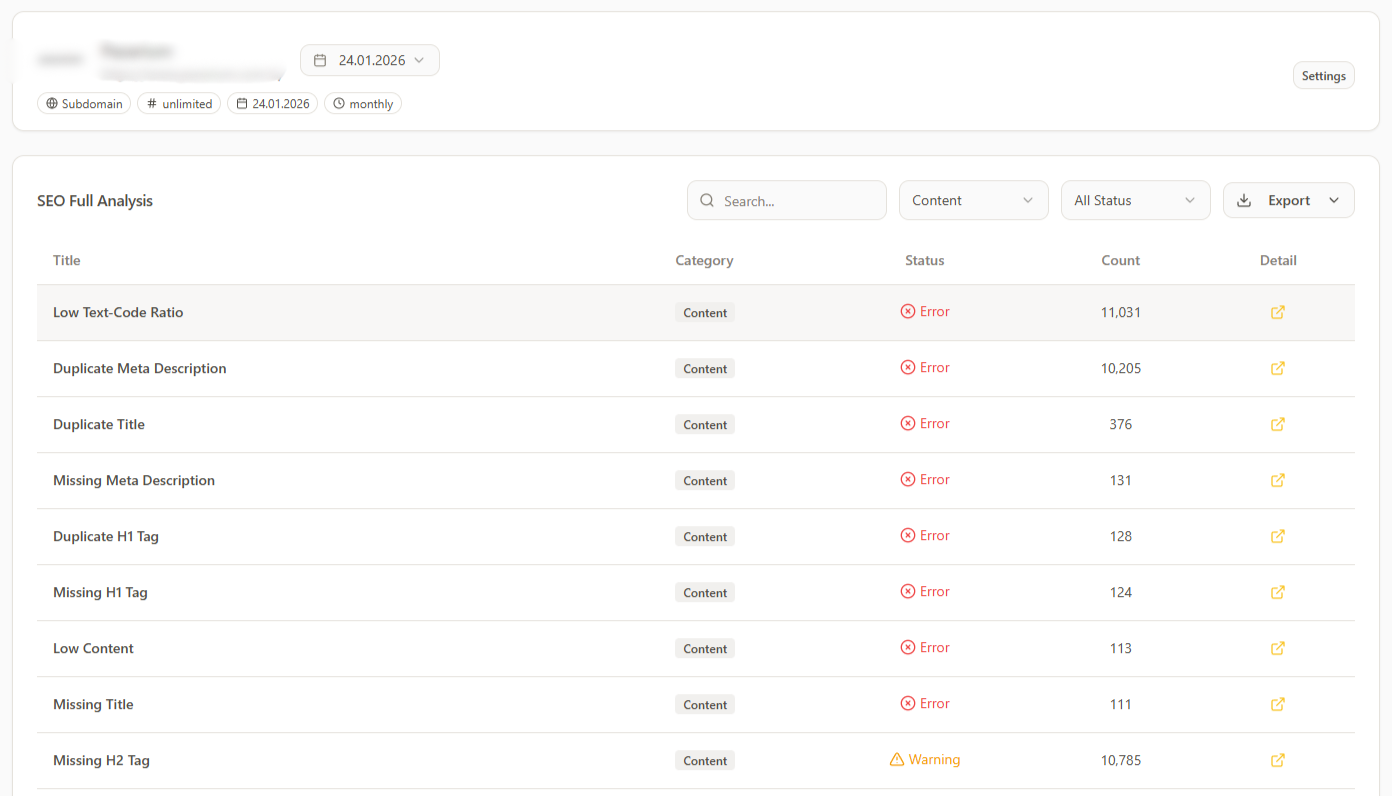
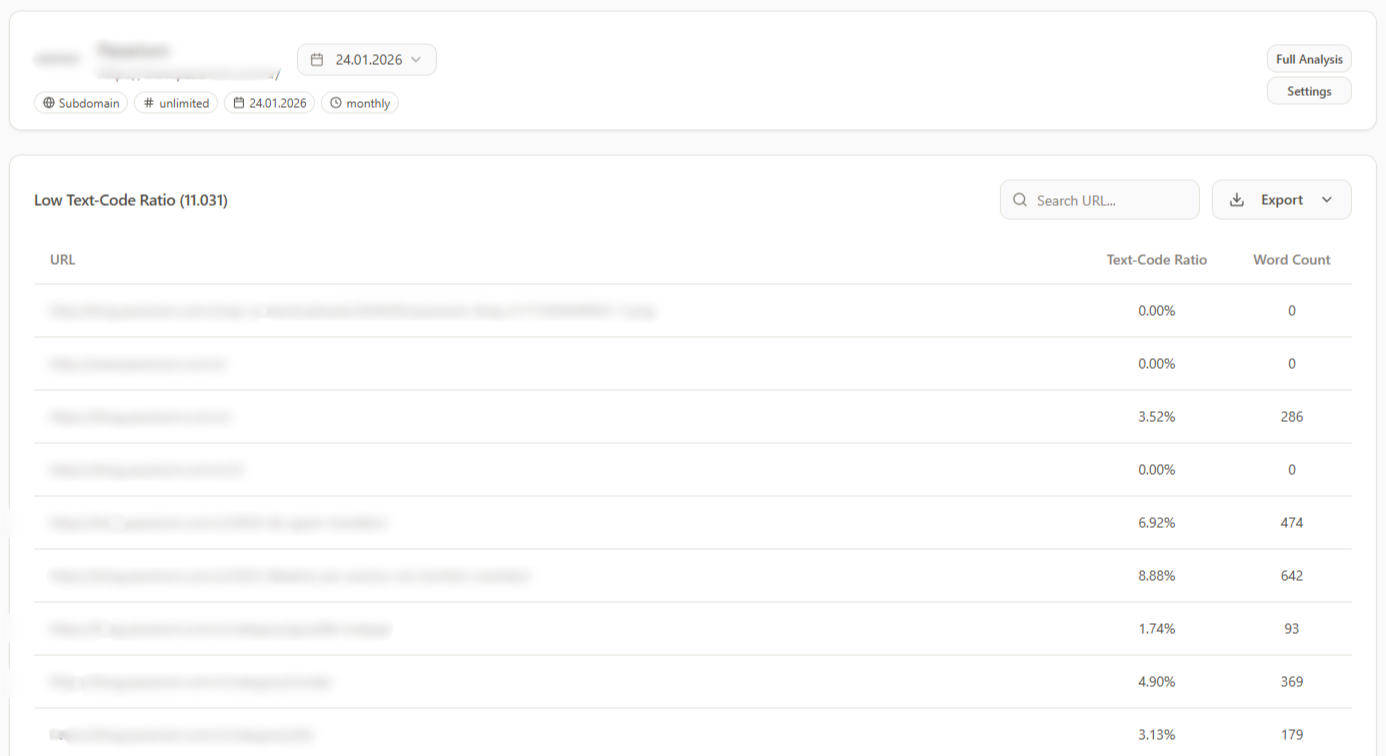
  • Failing to track performance – Without monitoring traffic, rankings, and engagement, you won’t know what’s working. And Raiser is here just to help you do that- just keep scrolling!

Start Using It With Low Cost – Optimize your site starting from 39 euros

References

Case Studies

+ 468%

organic impressions

+ 376%

sessions – non brand

+ 2.804

word first page

+ 597%

organic impressions

+ 488%

sessions – non brand

+ 4.230

word first page

+ 211%

organic impressions

+ 271%

sessions – non brand

+ 176

word first page

+ 654%

organic impressions

+ 410%

sessions – non brand

+ 4.837

word first page

Testimonials

Raiser completely changed the way we approach SEO and lead generation. What once seemed too complex and technical became manageable thanks to its user-friendly interface and powerful tools. We were able to analyze our site, fix issues, and implement targeted SEO improvements on our own. As a result, not only did our traffic grow, but the quality and quantity of our inbound leads increased significantly.

Rabia K.

Workinton

As an e-commerce brand, we struggled to understand why our website wasn’t performing for SEO. Raiser quickly highlighted key SEO issues and gave us clear, actionable steps. With improved site structure, faster load times, and smarter content optimization, we saw higher rankings, more qualified traffic, and a real boost in sales. Raiser didn’t just fix problems—it gave us the confidence to grow.

Ugur C.

Pazarium

Managing a global corporate website comes with the challenge of addressing different regional needs. Raiser helped us implement location-specific SEO improvements and content strategies that actually made a difference. From identifying regional keyword opportunities to optimizing pages per market, we gained both visibility and relevance in key local search results—without complicating our global structure.

Erdinc D.

Franke Turkiye

Using Raiser SEO solutions, we were able to get our digital marketing operations in order. Understanding clearly what needs to be done for improvement with in-depth analysis and seeing the results of our work with regular, detailed reports helped us immensely in speeding up our website, making it more user-friendly, and getting better rankings in Google.

Hanno A.

Briisk

For Agencies

Elevate efficiency with our powerful business enhancement tools and engage your target audience

White Label

Connect with ease across all channels.

Customization

Unlock insights for informed decisions.

Cost Effective

Connect with ease across all channels.